greenhouse tomatoes
RESEARCH & DEVELOPMENT

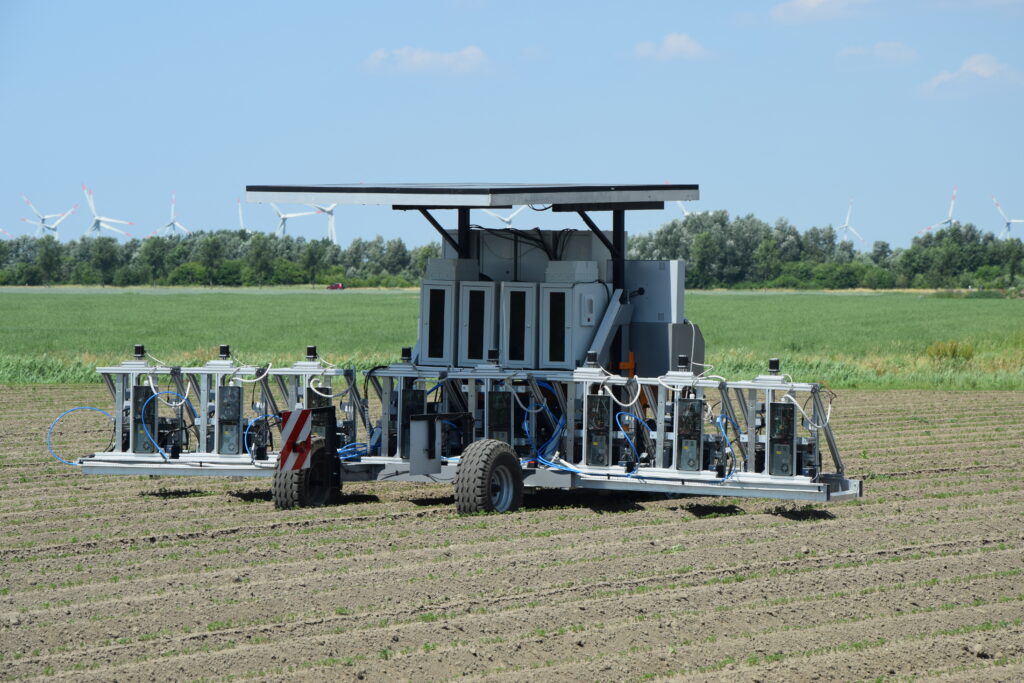
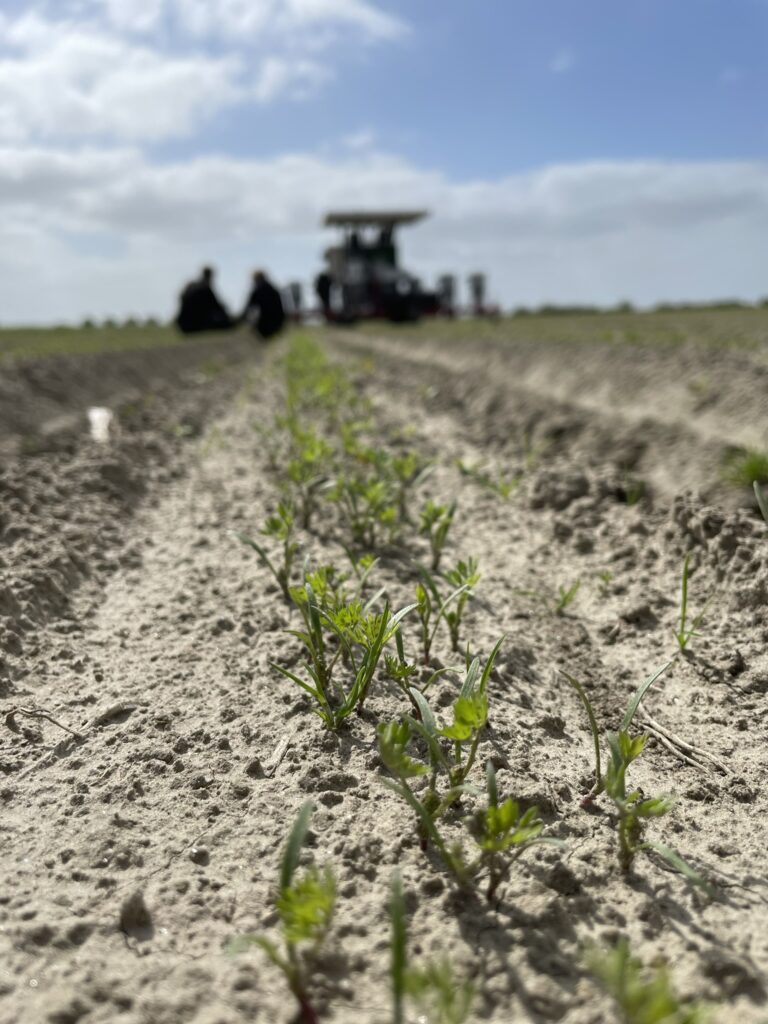
Our weeding robot can distinguish randomly sown crops such as carrots or beet from weeds and destroy them on the move.

FROM THE IDEA TO INNOVATIVE REALITY

One of the biggest challenges in our organic agriculture is the use of chemical pesticides, which has a worrying impact on people and nature. Back in 2008, we commissioned the West Coast University of Applied Sciences in Heide (FHW) to develop sustainable and automated weed control solutions. The motivation behind this: Herbicides must not be used in organic farming, and manual weed control by seasonal laborers is becoming increasingly difficult.

In 2013, we launched the pioneering project “Highly accurate weed detection in organic farming” at the FHW. In the following years, a 1-track functional model and an advanced 8-track robot were developed. The spin-off into nAIture GmbH & Co. KG in December 2018 marked a decisive step. Naiture, a play on the words “Nature” and “AI” (artificial intelligence), symbolizes our successful integration of state-of-the-art technology into organic farming. The system combines AI, robotics and big data and is based on machine learning to distinguish crops from weeds and ensure the quality of our organic vegetables.

At Westhof, sustainable organic vegetables are produced using advanced organic farming methods. With the help of our weeding robot and artificial intelligence, we optimize weed control and weed management. This allows our organic carrots and organic beetroots to grow under the best conditions.
Innovative weed control at Westhof: our weeding robots use advanced technology for sustainable organic farming. This allows our organic carrots and organic beetroot to thrive and achieve optimal quality.

Weeding robot

km/h maximum speed
0
% accuracy in weed control
0
Traces at the same time
0

WE ARE SHAPING OUR FUTURE INTELLIGENTLY

Our developed system achieves an impressive accuracy of approx. 98 % under constantly changing environmental conditions. Our robotic systems use AI to kill weeds without chemicals, especially on challenging crops such as carrots in organic vegetable production. The variable speed of 2-5 km/h enables efficient adaptation to different field conditions. With an impressive working width of 8 tracks, the system is modularly adaptable to other working widths.

With short-term goals such as the development of a non-mechanical weeding unit and the implementation of AI on energy-saving embedded systems, we are aiming for full solar operation. In the medium term, we plan to enter the market and explore further business ideas. Our long-term goal is not only to be firmly established on the market, but also to become a leader in innovative organic farming technology, while also supporting conventional agriculture.

Experience sustainable organic farming at Westhof with innovative weed control using weeding robots and artificial intelligence. Thanks to these advanced technologies, our organic carrots and organic beetroot grow to the highest quality.
In our research and development project, we focus on innovative methods for weed control in organic vegetable cultivation. Under the guidance of experienced project managers, we integrate advanced weeding robots and artificial intelligence to develop sustainable and efficient solutions.

I have a special connection to the weeding robot, which I have been working on since 2004. AROS enables an efficient search for fawns, while MOOS provides early warning of pests. These projects show that technology can make a positive contribution to agriculture.

REVOLUTIONARY SOLUTIONS FOR OUR ORGANIC AGRICULTURE

Our latest agricultural innovations include a successful autonomous roe fawn tracking system (AROS), which has improved efficiency in the fields. At the same time, we are developing a mobile ground station (MOOS) that sends daily images of fields to detect pests such as the carrot leaf miner and alert farmers to ensure the quality of organic vegetables.

Future research projects will focus on the introduction of autonomous systems that record data from the fields and enable predictive farming in the long term. Another project aims to automate the detection of virus-infected plants in potato fields to help farmers identify and remove infected plants in a timely manner and ensure the health of organic vegetables.

With these developments, we aim not only to address current challenges, but also to promote sustainable and efficient agriculture in the long term. Our technologies are designed to optimize not only the organic farming of organic vegetables, but also conventional agriculture through advanced solutions and data-based approaches.

Our approach to organic vegetable cultivation includes a diverse crop rotation with clover grass and flowering meadows, which promote biodiversity and support species protection. We use innovative and efficient AI-supported drones with an autonomous fawn detection system that helps to rescue young animals.

nAIture GmbH & Co. KG

  • Zum Westhof 6, DE-25764 Friedrichsgabekoog

  • + 49 4839 9535-0

  • info(at)westhof-bio.de